Showing posts with label Announcements. Show all posts

Wednesday, July 02, 2008

introducing... America Adrift

Dear friends, colleagues, readers, bloggers in arms, and those of you who don't know where you are or how you got here,

The Atlantic Community has moved!

We've staked out a new homestead on the cyberfrontier, America Adrift. It's rather simple to find us. Just type, americaadrift dot com. Say it with me now three times; America Adrift, America Adrift, America Adrift. Please pass on the word, mark your web browsers and update your blog roles. You can feed us here.

Same tag line as before, "transatlantic perspectives on america." Of course, we are only transatlantic in so much as one can conceive of a "transatlantic cyberspace." But don't ask any of us to explain what that really means. Our mission remains:

America adrift is a collaborative weblog and community for research, analysis and commentary on American society and culture. Our aim is to provide a public voice for European scholarship in American Studies, forging stronger communication between the academy and the public on both sides of the Atlantic.

Mission accomplished? I guess. Our move is basically premised upon being able to do more of what we already do, just with a few more bells and whistles. But really, just a few. Notice there are now individual author pages with a listing of all articles by that person. You can access them from the right column just bellow the drifting apple. You'll also find a column titled, "recent posts" for quick reference. We'll be adding features as we go along. Ideas and feedback are most welcome.

For me, the best thing about being part of this community has been just that, the community. It's been a great experience participating with my fellow contributors and I look forward to carrying on the conversation at our new address. This site has also been a vehicle for meeting many interesting people out in the big bad blogosphere. See our blogrole for example.

When this thing got started I had no idea where it would go. I still don't. But the ride thus far has been both "interesting" and rewarding. It's also fun when I speak with folk who say stuff like, "I follow your blog but I don't always no what it's about...just what did that Alice B. Toklas Brownies article mean anyways?"Not to worry, we don't always know what it all means either. But, as "the best little American Studies blog in the universe," we try to take it all in strides and not take ourselves too seriously. At least not here. That's not to say we don't engage in serious discussions. Seriously.

Let me just say a huge thanks to Bent in particular and to all our contributors generally. You guys made this the lively community that it is.

Speaking of which, see for example Anne's latest post, The Real Ambassadors, a wonderful reply to Fred Kaplan's piece on the Jazz Ambassadors which appeared in the New York Times earlier this week.

Also see Camelia's latest post, FEDERMAN FRENZY, introducing a fantastic new collection of essays on Raymond Federman (all available online).

Stay tuned, Steen's got something on the way but if you missed his article on the White Stripes you should go back and have a look at, The Big Three Killed My Baby.

If you've got a sweet tooth go back and read Bent's Alice B. Toklas Brownies article. Also, you'll find several recent conference announcements along with all his blog posts here.

Summertime will hopefully get in the way of too much blogging but with the return of Fall expect us full swing ahead.

All the best and see you on the flip side.

Sunday, June 29, 2008

Migration and Literature

An increasingly hot topic in literary studies and in the area studies fields, such as American Studies is the relationship between writing, place, identity and belonging. Evidence of this agenda getting more and more important can, for instance, be found in the proposed topics for conferences and seminars worldwide. In Denmark the next big Am. Studies event, the Nordic Assosciation for American Studies' biannual conference, has as its theme Cosmospolitanism. Among the many questions the conference invites us to contemplate is the following:


Does the prominence of writers such as Junot Dìaz, Francisco Goldman and Jamaica Kincaid-or the focus on border regions and bilingualism in the works of older writers like Cormac McCarthy-suggest a cosmopolitan turn in contemporary "American" literature?

Hopefully by May 2009 many scholars and students will have thought of topics and papers that will help illumminate this and many other issues pertaining to migration, writng and cosmopolitanism (and its opposites)...

Nearer in time Copenhagen University offers a one-day course in Migration and Literature on September 26. While designed for secondary school teachers and librarians, the event is also open for students in limited numbers. The program can be perused here.

The course concludes with an extremely exciting event at the Literaturhaus in Møllegade, Copenhagen. This event is a triple reading by the following authors:

Ha Jin, representing China and the US, author of Waiting and Under the Red Flag.

Shadi Bazeghi, Iran and Denmark - a young poet writing in Danish.

Rubén Palma, born in Chile, residing in Denmark, writing in Danish, translated into English and published by Curbstone Press in New York (The Trail We Leave).

Palma is little-known in Denmark, but has intriguing comments about what made him become a writer once he realized that he had become a transnational subject:

From author interview:

YOU BEGAN WRITING AT THE AGE OF THIRTY-ONE IN DENMARK. HAD YOU EVER CONSIDERED BECOMING A WRITER WHILE YOU LIVED IN CHILE?

I grew up in a poor Chilean barrio with a strong, old-fashioned macho culture. I would not say that I found writing feminine. In fact, I always found writing an interesting activity. But I just did not consider it to be masculine enough. As a boy, and later as a teenager, all I wanted was to be a football player or a boxer. With
those images in my mind, I do not think I would ever have become a writer in Chile.

HOW DID DENMARK INFLUENCE THIS DECISION?

The idea of writing began taking shape after I had been in Denmark for eleven years, when I realized that maybe I was never going to return to Chile. At that point, I understood that Chile was left behind, and that Denmark was no longer a transitory place in my existence. It sounds paradoxical but I felt a kind of emptiness which nevertheless liberated a lot of new feelings. Suddenly I was able to look back and ahead, to look at myself in a new way.

Read more here...

I hope some of our readers will find their way to this twice transatlantic event in September!

See also...

Thursday, June 26, 2008

No Caption Needed Birthday

Robert Hariman and John Lucaites recently posted the one year anniversary of their fantastic blog, No Caption Needed.

You can read Bent's review of both the blog and their seminal book by the same title here.

They're experiencing some "growing pains", something we are familiar with here.

It’s been a year since we began this blog. We had no idea what we were getting into. The initial idea was to put up an ad for the book. Not a great idea, but then we thought that we could write a few posts to thicken the ad. After all, neither one of us had the time to do this on a regular basis. One thing lead to another, and soon we had created a monster: we loved writing the posts and seeing the audience grow, but we still didn’t have the time, so we told ourselves that we’d do it for a year and then quit. It’s been a year and we don’t want to quit, but we need to make some changes.

I encourage you to stop by and leave your comments or drop them an email, or better yet both. This is one of the little jewels out in the academic blogosphere (and a service to the public at large). Both blog and book have been a source of inspiration for me personally as I have become increasingly drawn into visual culture, semiotics and that emerging niche that Bent refers to as iconicity studies.

Best of luck and continued success with No Caption Needed.

Friday, June 20, 2008

CFP: Jack Kerouac, Kerouac’s On the Road and the Beats

Following up on our spring sequence of posts on The Beats (conveniently collected here), we'd like to help announce a two day conference to be held at the University of Birmingham in December. Scholars will meet and give papers on aspects of the Beat Generation with a particular focus on Kerouac's novel On the Road. But perhaps even more enticing is that the original scroll manuscript of that novel will be present in Birmingham as well, in a rare European visit (the scroll has mostly been on display in US cities). I am very excited to finally get to see the Holy Grail of Beat artefacts up close. My paper, btw. will probably investigate Neal Cassady, the real life model for the novel's protagonist, con-man, Holy Goof, culture hero, Dean Moriarty...

Here is the CFP in its entirety:

A two day conference at the University of Birmingham UK

(Thursday 11 December 2008 and Friday 12 December 2008)

Marking the fiftieth anniversary of On the Road’s publication in the UK, in 1958 (following its 1957 publication in the US). The University of Birmingham has arranged for the 1951 original typescript manuscript of On the Road - the world-famous scroll of 1951 - to come to the Barber Institute at the University during December 2008 and January 2009. A series of events is planned to celebrate this, including a Film Event (during the evening of 11 December) timed to coincide with this two-day conference, which will likely include the UK premiere showing of One Fast Move and I’m Gone: Kerouac’s Big Sur, produced by Jim Sampas.

The conference will take as its focus the ‘Beats’ and their relations to On the Road and its themes - travel, jazz, sexuality and gender, rebellion, disaffiliation and alienation, class and ethnicity.

Plenary speakers will include Tim Hunt, Matt Theado and Oliver Harris

Please do come along to this exciting event and - if you wish - deliver a paper.

CFP: If you want to deliver a paper please submit a title for your paper and an abstract of between 100 and 250 words for consideration to: r.j.ellis@bham.ac.uk by 31 October 2008

Friday, June 06, 2008

The Ninth Annual Honora Rankine-Galloway Address

“Will Race Survive in the US? The Possibilities and Impossibilities of the Obama Phenomena”

By Professor David Roediger,

University of Illinois at Urbana-Champaign

Sponsored by the Embassy of the United States, Copenhagen

Center for American Studies

University of Southern Denmark, Odense

Thursday, September 25, 2008

14:15-16:00, Room 100


This lecture, based on David Roediger’s shortly forthcoming How Race Survived United States History (Verso), sets the historic presidential candidacy of Barack Obama within longer patterns of white supremacy in the U. S. past. It argues that the successes of Obama’s candidacy register important, though contradictory, changes in racial attitudes in the post-1965 U.S. At the same time, the “Obama Phenomenon” also obscures the extent to which the structural factors leading to race-thinking persist and raises critical questions regarding the political challenges of moving past a view of race predicated on the simple dualism of black and white.

Professor Roediger teaches history and African American Studies at University of Illinois at Urbana-Champaign. His books include Working Toward Whiteness: How America's Immigrants Become White (New York: Basic Books, 2005); Colored White: Transcending the Racial Past (Berkeley: University of California Press, 2002); Towards the Abolition of Whiteness: Essays on Race, Class, and Politics (London and New York: Verso Books, 1994); and The Wages of Whiteness: Race and the Making of the American Working Class (Rev. ed. London and New York: Verso Books, 1999).

All Welcome!

For further information, please contact Dr. Benita Heiskanen, Center for American Studies, SDU-Odense, email benita@hist.sdu.dk, tel. +45-6550 3133.

Monday, June 02, 2008

Rock Pioneer Bo Diddley Dies at 79

NPR.org, June 2, 2008 - One of the fathers of rock 'n' roll died Monday at the age of 79. Bo Diddley was born Ellas Bates in Mississippi and grew up in Chicago, where he played guitar on street corners before being discovered by Chess Records. He leaves behind a sound that helped build a musical movement.

What made Bo's music so unique? I don't know exactly but if I had to assign to it just one adjective it would be, crunchy. Yeah, what a wonderful crunchy sound.

Wednesday, May 21, 2008

CFP: Cultures of the Image

Iconotopoi/Bildkulturen (Cultures of the Image)
Current Academic Practices in the Study of Images
Joint Eikones-McGill Graduate Conference
Department of Art History and Communication Studies
McGill University, Montreal
December 3 to 5, 2008

The joint McGill-Eikones Graduate Conference Iconotopoi/Bildkulturen (Cultures of the Image) aims to identify and challenge cultural and linguistic barriers within the academy, so that the study of images may one day become as mobile as its objects of inquiry.

Since the early 1990s, at least two interdisciplinary fields dedicated to understanding images attest to the differences in cultural/academic approaches to the study of images: Visual Studies in America, and Bildwissenschaften in German-speaking Europe. Each of these fields traces its roots back to the Linguistic Turn, and both stem from the Pictorial or Iconic Turn (cf. W.J.T. Mitchell’s Critical Iconology and G. Boehm’s notion of Bildkritik). Bildkritik emphasizes the singular image, its inner tensions and structures, and its temporal and affective interplays. In contrast, Visual Studies often focus on the social and political contexts of image productionand reception, thereby broadening the field in which images are considered.

http://www.mcgill.ca/ahcs/iconotopoi

Read more...

Friday, May 09, 2008

Harvard Law Commits to Open Access Scholarship

For the times they are a-changin'

“Each Faculty member grants to the President and Fellows of Harvard College permission to make available his or her scholarly articles and to exercise the copyright in those articles. More specifically, each Faculty member grants to the President and Fellows a nonexclusive, irrevocable, worldwide license to exercise any and all rights under copyright relating to each of his or her scholarly articles, in any medium, and to authorize others to do the same, provided that the articles are not sold for a profit. The policy will apply to all scholarly articles authored or co-authored while the person is a member of the Faculty except for any articles completed before the adoption of this policy and any articles for which the Faculty member entered into an incompatible licensing or assignment agreement before the adoption of this policy.”


Wednesday, April 30, 2008

Cars and Killers

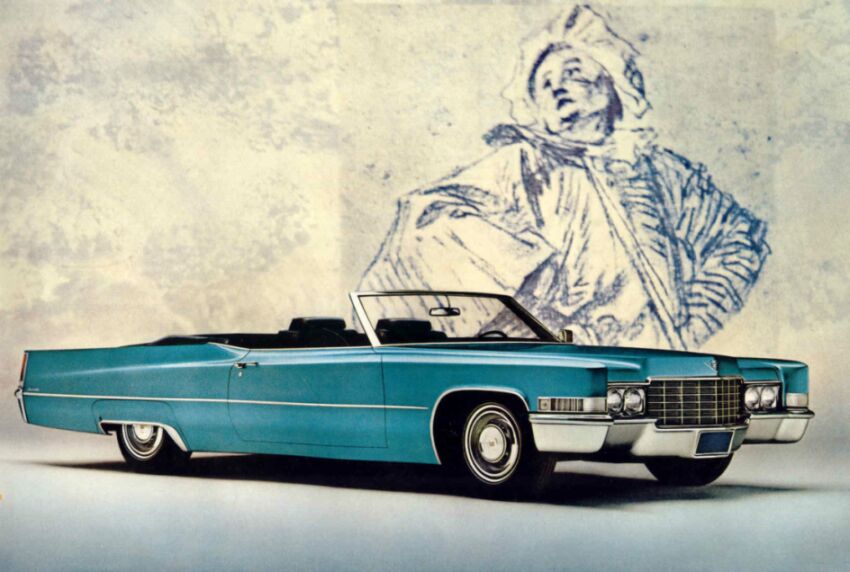
Next week will be a busy academic whirlwind tour of two Nordic capitals for me: Helsinki and Oslo. The two main American Studies events of the year are crammed together as Consecutive conferences: The Renvall Institute's Helsinki do, The Maple Leaf and Eagle Conference, has reached instalment no. 12 in its fine run (it will be my third time around as a participant). The theme is always broad and this year is no exception: "North America - Relations and relationships". My contribution is about the cultural importance of one specific, iconic brand of car: The Cadillac...


I approach this broad topic from a cultural text studies point of view, analysing film, photos, novels and songs - investigating how the cars are represented as markers of specific identity positions within specific difference hierarchies:

The Cadillac car has long featured in the American imagination as a signifier of cool masculinity, mastery of the road, financial surplus and a predilection for luxury and comfort (cf. the lyrics to ‘Cadillac Man’, quoted below). I propose to analyze a number of cultural texts that construct, establish and eventually subvert these connotations. I am particularly interested in constructions of race and sexual orientation utilizing the vehicle of the Cadillac. Texts to be analyzed include Jack Kerouac’s “fag Cadillac” in On the Road, rock singer and performer Mink DeVille, the persona of James ‘Thunder’ Early (played by Eddie Murphy) in the 2006 movie Dreamgirls, and various rock ‘n’ roll lyrics featuring comparisons of Fords and Caddies…


Well I’m the king of the road
Ain’t got no place to go, no place I call home
Seen the world from behind this old wheel
Driving away from those feelings I feel
- Cadillac Man
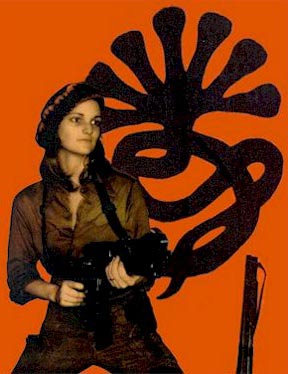
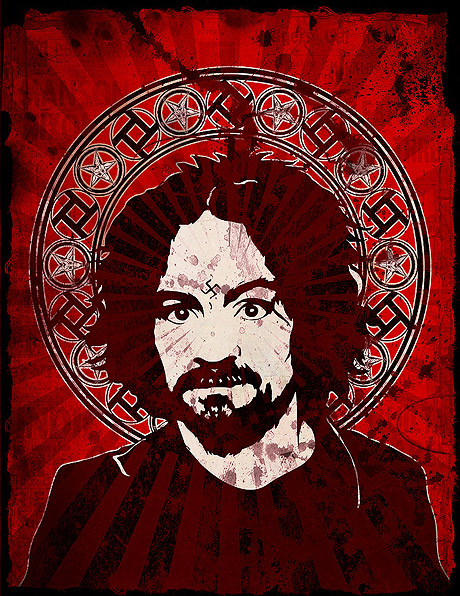
After a few days in Finland we'll relocate to Norway for the big European American Studies event under the auspices of the EAAS. Here my presentation is in connection with my on-going project on American Icons, more specifically some icons of transgression, associated with the 1960s. I'll give a paper on two celeb-criminals, two very different cultural texts, Patty Hearst and Charles Manson:

All iconic representations of actual persons (living or dead) are caught in a dichotomy between elements of normality/familiarity and elements of transgression. Manipulation of representations of celebrities or famous persons into hero- or other-images can either constitute adversarial or collaborative icon work. In adherence with the conference theme of “E Pluribus Unum or E Pluribus Plura” it would be interesting to examine iconic images that are meant to be particularly transgressive of normality and challenge stereotypical images of American wholesomeness. I propose to look at specific collaborative, yet provocative representations of two 1960s icons of transgression: Charles Manson and Patty Hearst, and to analyze how these particular images simultaneously stylize and sacralize these counterculture (anti)heroes, turning the viewer of the icons from passive consumers into ardent worshippers, consumers or cultural agnostics, all according to our ideas regarding the subjects and symbols in question. The images are reproduced below:


Monday, April 21, 2008

as|peers inaugural issue

As of 24. April 2008, the first issue of the new graduate journal aspeers is available online and in print. aspeers is Europe’s first and currently only peer-reviewed graduate journal in American Studies. The founding issue delivers a snapshot of American Studies work in European graduate programs. Its six academic papers are complemented by five creative contributions from around the world.

For more information on aspeers, please visit: www.aspeers.com
To access (and respond to) the inaugural issue, visit: www.aspeers.com/2008

In the summer of 2008, aspeers will issue a new, topical call for papers for the 2 (2009) issue. Register online at www.aspeers.com today, to make sure you receive the call for papers by email.

Disclaimer:
My essay, "Don DeLillo and Society’s Reorientation to Time and Space: An Interpretation of Cosmopolis" was among those selected for the first issue.

If you are interested about how the journal came into being you can read the foreword, by Dr. Anne Koenen and Sebastian Herrmann here.

The idea to let a seminar publish a graduate journal stems from two major influences. First, Leipzig’s American Studies Program has traditionally searched for new and innovative ways to bring together research and learning...

Secondly, the so-called Bologna Process encourages European University programs to offer “Professional Skills Modules” in which students learn and practice skills related to their field of study. In 2007, the inauguration of the Institute’s new MA program thus offered the opportunity to try a new form of blending academic learning, skill development, and professionalization.

Working with the editorial team was a fantastic experience. I was more than pleased with both the academic and professional level of the entire process. I admit a degree of envy for not having had the opportunity myself to participate in what must have been an equally if not more rewarding experience for the editors.

As an "open source journal" all are welcome to visit and participate in a discussion on any of the journal entries. I welcome your feedback, comments and criticism.

Thursday, February 28, 2008


Not sure how many know about Piled Higher and Deeper, but more should definitely read it.

Monday, February 18, 2008

Review of "Det andet USA" by Carl Pedersen

A book which should appeal to all Danish speakers with an interest in American Studies has recently appeared: Carl Pedersen (now adjunct professor at Copenhagen Business School's Center for the Study of the Americas) has published the third volume of his Danish-language USA-trilogy, titled Det andet USA. In this book Pedersen examines the roots of the American social and political system from Roosevelt's New Deal policies to today, and he proposes that after a long spell of Republican mismanagement of the legacies of class solidarity, environmental care and multicultural acceptance the US may be poised for a return to a more caring set of policies under the coming Democratic presidency of Barack Obama...


In the book's first portion "Rødder" (Roots) Pedersen interlaces his account of US history from the early 20th century onwards with memoirs of his own family, his parents being Danish immigrants meeting more or less at random in New York City, getting married, settling in New Jersey and raising a family there. This personal touch of life writing brightens up the historical account, which also features its own political heroes and villains, in the form of various Presidents and candidates whose various policies and ideologies are examined throughout the book. The "Roots" chapter is followed by 3 more specific case-oriented chapters, discussing Hurricane Katrina, environmental issues, and immigration and multiculturalism issues, respectively. The closing chapter focusses on a more topical issue, namely the ongoing Presidental campaign, but also offers a form of utopian speculation on the future direction of the US, if - or when - the "other" America takes over.

Here is a quote from my review:
Ærindet med Pedersens bog er tydeligvis tofoldigt: Dels ønsker han brændende forandring i sit fædreland og bogen bliver et passioneret argument for denne forandrings uundgåelighed efter en lang række mørke år under regressive præsidenter og deres fejlslagne administrationer; dels vil Pedersen meget gerne have sit danske publikum til at indse at USA er et mere multifacetteret samfund end det mediebillede de fleste danskere ligger under for, hvori USA er et bibel-bankende, skydevåben-befængt, cowboy-bestøvlet, selvtilstrækkeligt forbrugerparadis, stereotypisk befolket af konservative dødsstrafstilhængere og overvægtige, fastfood-afhængige ignoranter med sport på hjernen... Der er altså, som Pedersens titel siger, et andet USA derovre, både nu og endnu mere tydeligt i en ikke alt for utopisk fremtid, som har de svages kår på sinde, som tror på en bæredygtig økologisk rolle for Amerika, og som indser at USA er et land hvor mange racer og etniciteter skal sameksistere og deles om riget, magten, og æren: Et USA der står i en slags multikulturel regnbuekoalitions tegn.

Read the rest at Kulturkapellet..

Tuesday, February 12, 2008

Tom Lantos, 1928-2008

"Washington, DC - Congressman Tom Lantos (D-San Mateo, San Francisco), 80, passed away this morning due to complications from cancer at Bethesda Naval Medical Center."

Last year, Tom Lantos visited the University of Southern Denmark, attending the dissertation defense of his daughter, Katrina Swett. Mrs. Swett's dissertation was on the role of the U.S. congress in global human rights issues. See, The Lantos Doctrine for more.

Lantos was also the only Holocaust survivor ever to serve in Congress;

Born Feb. 1, 1928 in Budapest to a middle-class Jewish family, Lantos was 16 when the Nazis occupied Hungary and sent him to a labor camp. He escaped twice and eventually made it to a safe house run by Swedish diplomat Raoul Wallenberg. With most of his family killed by the Nazis, Lantos joined the resistance. He arrived in the United States in 1947 on a college scholarship, earned a master's degree in economics at the University of Washington and a doctorate in economics at the University of California-Berkeley. Lantos taught for 30 years at San Francisco State University before winning a congressional seat in 1980.

See also this write up in the SF Gate.

From the limited secondary sources I've read, Lantos was a man that never minced words, a rare trait in contemporary politics. Anyone who attended the panel discussion as SDU following his daughter's dissertation enjoyed a great opportunity to hear the man, sharp and unfiltered. I later met him and his wife Annette, with Katrina and her husband Richard at the train station in Odense, waiting for the train to Copenhagen. We talked about family, me being an expatriate (by choice), and how much everyone enjoyed Denmark.

The Atlantic Community, SDU, and everyone here in Denmark who had the opportunity to meet Tom Lantos wish to extend our sincerest condolences to his wife Annette, daughter Katrina and their families.
-

Monday, February 11, 2008

Review of I'm Not There

For those of you who can read Danish, I have a long review of Todd Haynes' 'Dylan'-film I'm Not There at Kulturkapellet. Check it out, if you like Dylan, or postmodern meta-film, or both...

For those of you who don't read Danish, here is a clip from the film, depicting the hilarious first meeting between Cate Blanchett's Dylan character (Jude Quinn - one of the six 'Dylans' in the film) and Davis Cross' Allen Ginsberg, who pulls up alongside Quinn's limo in a weird golf cart-like vehicle driven by the actor who plays Peter Orlofsky, Ginsberg's long time lover...


Another great moment in the film occurs when 'another' 'Dylan', Arthur Rimbaud (played by Ben Whishaw) gives his simple rules for a life as "a complete unknown" as one real Dylan put it in "Like a Rolling Stone":

Seven simple rules for a life in hiding:
One, never trust a cop in a raincoat.
Two, beware of enthusiasm and of love, each is temporary and quick to sway.
Three, if asked if you care about the world's problems, look deep into the eyes of he who asks, he will not ask you again.
Number four and five, never give your real name, and if ever told to look at yourself, ever look.
Six, never say or do anything which the person standing in front of you cannot understand.
And seven, never create anything. It will be misinterpreted. It will chain you and follow you for the rest of your life, and it will never change

Rimbaud's tenets - which he himself tried in vain to follow, giving up writing at the tender age of 21 - illustrate every artist's dilemma with creation and audience. They also marvellously illustrate Rimbaud's famous claim: "Je est un autre" ("(The) I is another"). The artist committing acts of autobiography is always suspect, always an outlaw, always an other to oneself. An insight both Dylan and Todd Haynes seem to subscribe to, but also an insight which turns out to provide no valid defense when the desire to create becomes too overwhelming and must be obeyed...

4 free songs from the film are on offer from the movie's MySpace site. Jim James' "Goin to Acapulco" - performed by him in the film wearing whiteface a la Rolling Thunder Revue-era Dylan, set in the carnevalesque town of Riddle where it's Halloween all year round - is a stand-out. Jeff Tweedy, Cat Power and Sufjan Stevens all do credible work on their cover versions too...

Monday, January 21, 2008

Wood S Lot

The exquisitely designed culture/theory/aesthetics portal, Wood S Lot, has been showing us some 'blog love' over the last couple of days - for which we thank them, and reciprocate...

I am always very inspired by their photography finds - check out this wintry image, for instance. There is always something to look at and think about on the 'Lot', and before you know it you find yourself delving into images from Wisconsin history, or contemplating the circular wisdom of quotes like this one:

Beware of thinkers whose minds function only when they are fueled by a quotation.
- E.M. Cioran


Best not think too much about that one...!

Friday, January 18, 2008

Going to the Chapel?


Those of you who can read Danish might be interested in visiting Kulturkapellet, a new Aalborg based portal featuring reviews of all things cultural. It covers film, literature, theatre, music, games and the arts. Also featured are occasional essays - slightly longer and more 'academic' pieces on cultural and philosophical issues. There are also reviews of non-fiction - and one piece for instance is of clear Am. Studies interest: Steen Christiansen's piece on Apokalypsens Amerika. More are sure to follow... The 'Chapel' welcomes guest reviewers if anyone cares to sign up - check the contact page for details.

Wednesday, January 16, 2008

Fair Use of Digital Media

MediaCommons reports, "YouTube purges: fair use tested"

Last week there was a wave of takedowns on YouTube of copyright-infringing material — mostly clips from television and movies.

Fortunately, since we regard these sorts of media quotations as fair use, we make it a policy to rip backups of every externally hosted clip so that we can remount them on our own server in the event of a takedown.

This is their fair use statement. I'm personally more liberal with what I'll post here. However, if you are in doubt, this is as good a guideline as any.
MediaCommons is a strong advocate for the right of media scholars to quote from the materials they analyze, as protected by the principle of “fair use.” If such quotation is necessary to a scholar’s argument, if the quotation serves to support a scholar’s original analysis or pedagogical purpose, and if the quotation does not harm the market value of the original text — but rather, and on the contrary, enhances it — we must defend the scholar’s right to quote from the media texts under study.

In Media Res
, a MediaCommons project, has an innovative "blog." They "provide 30-second to 3-minute clips accompanied by a 100-150-word impressionistic responses." See the latest post, Two Words: Chuck Norris here for example.

Image: "Steal this Album" by The Coup


Saturday, January 12, 2008

New online journal issues

This has been a rather good weekend for new issues of online journals of American Studies and general academic interest.

The excellent poetry journal out of UBC, Vancouver - Studio - has its second issue out, or at least ready for a sneak preview here. The editor, Rishma Dunlop, is an excellent poet in her own right and the journal does a good job both presenting established and emergent poets, and in providing essays on poetry, particularly pertaining to the pedagogical aspects of using poetry in the classroom (check the Poetry & Education section). The first issue of Studio had especially interesting stuff by multicultural poet Meena Alexander who is a terrific voice both poetically and intellectually. The current issue has excellent stuff from Robert Gibbons (here pursuing an O'Hara-like poetry of the quotidian) and Evie Shockley (poignant prose fragments), among others, both of whom I highly recommend checking out. You can also read a short review, written by myself, of an online chapbook by Gibbons.

By fortuitous coincidence, this weekend also sees the publication of the new issue of Janus Head, an interdisciplinary journal which covers literature, art, philosophy and psychology. Janus Head is entering its 10th volume and all essays are available online as PDF-files as well as in a print volume form. This issue has particularly interesting essays on iconic representations of suffering in Buddhism and Catholicism (a neat a propos to our recent discussions of American icons on this blog) by Alan Pope, and on race and gender issues in the work of poet Sylvia Plath by Ellen Miller. In the fiction and poetry section we again find Robert Gibbons, this time decidedly more political and historical in his deadly accurate aim. One should also not miss the 14 Paul Celan poems featured in translation in this issue.

Friday, January 11, 2008

European Journal of American Studies (Online)

This is great news. We love open-access! Here's the letter that was passed on through DAAS.

The second issue of EJAS for 2007 is now fully on line, having recently been complemented by two new articles. Please accept my apologies for the slight delay in publication, due to server trouble. Also, do spread the word in your associations, telling their members to read EJAS , write in it and spread the news of its existence. May I remind you that a special issue has been advertised for 2008 and that two accretive issues are planned for the same year ?

Both issues for 2007 are, it seems to me, quite varied and interesting. The Journal is now welcoming submissions for 2008. To the members of the Editorial Committee who worked hard toward these results, my grateful thanks. The Committee will meet in Oslo to iron out crinkles and make plans for the future.

A very good year to all.

Marc Chénetier

This the first article listed;

Either you bring the water to L.A. or you bring L.A. to the water:
Politics, Perceptions and the Pursuit of History in Roman Polanski’s Chinatown
by Ian S. Scott

Being that I had just finished (re)watching Chinatown I was immediately drawn to it. I'll be checking it out again from the library after reading this fascinating piece. What I found most interesting was Scott's analysis of how this film and others in its tradition present the city spatially. Despite the broad and wide-open spaces, Scott notes that the LA cityscapes find a way to close in around the characters, creating claustrophobic anxiety. Michael Mann's Heat immediately comes to mind which Scott also examines in this article.
It is these visual pretensions of a city at once constructing and deconstructing its image, much copied in recent Hollywood accounts of Los Angeles, that not only give clues to its contemporary cinematic relevance but which are also an important link to the history played out in Chinatown and in the city’s later urban development.As Neil Campbell points out in his work on the “new west,” Polanski and Towne, like Chandler before them, recognized that cities were the lifeblood of the west and operated in binary aversion to the space around them.[emphasis mine]

Contemporary Californian historian Kevin Starr has commented that McWilliams had an ambivalent, divided image of the state. Like Jake Gittes and the fictional companions that follow him, he was “both mesmerized and appalled by the demotic vigor of the Southland, its confusing profusion of people and half-baked ideas” (Starr 19). Gittes is a disciple of such views and films like Blade Runner, To Live and Die in L.A., Heat and Collateral, as well as Joel Schumacher’s Falling Down (Warner Bros; US, 1992), Lawrence Kasdan’s Grand Canyon (20th Century Fox; US, 1990) and John Singleton’s Boyz ‘n the Hood (New Deal; US, 1991). All cinematically reinforce a post-structuralist vision of characters in each movie that resent the intrusion of this metropolitan force upon their lives but who are powerless to resist all the same [emphasis mine]. Starr sums up the dilemma for which Chinatown the movie has become shorthand identification. “Here, after all,” he says, “was an overnight society in search of its history, which it would both discover and manufacture” (Starr 19).


Monday, January 07, 2008

2008

I hope everyone here had an enjoyable holiday season and wish you all much success and happiness in 2008. I've been in Paris, completely unplugged for the last week. As things around here get back into action I'm reminded of the Chinese proverb (or curse) "may you live in interesting times."

Also, I wanted again to welcome both Bent and Camelia. We appreciate the positive responses to their posts. We will be looking forward to more.